
How to Complete Form 145 for Personal Income Tax (IRPF) and Avoid Payroll Errors
This is what the Supreme Court says
Every year, thousands of employees complete Form 145 without paying much attention to it. However, this document has a direct impact on your payroll and on the outcome of your income tax return.
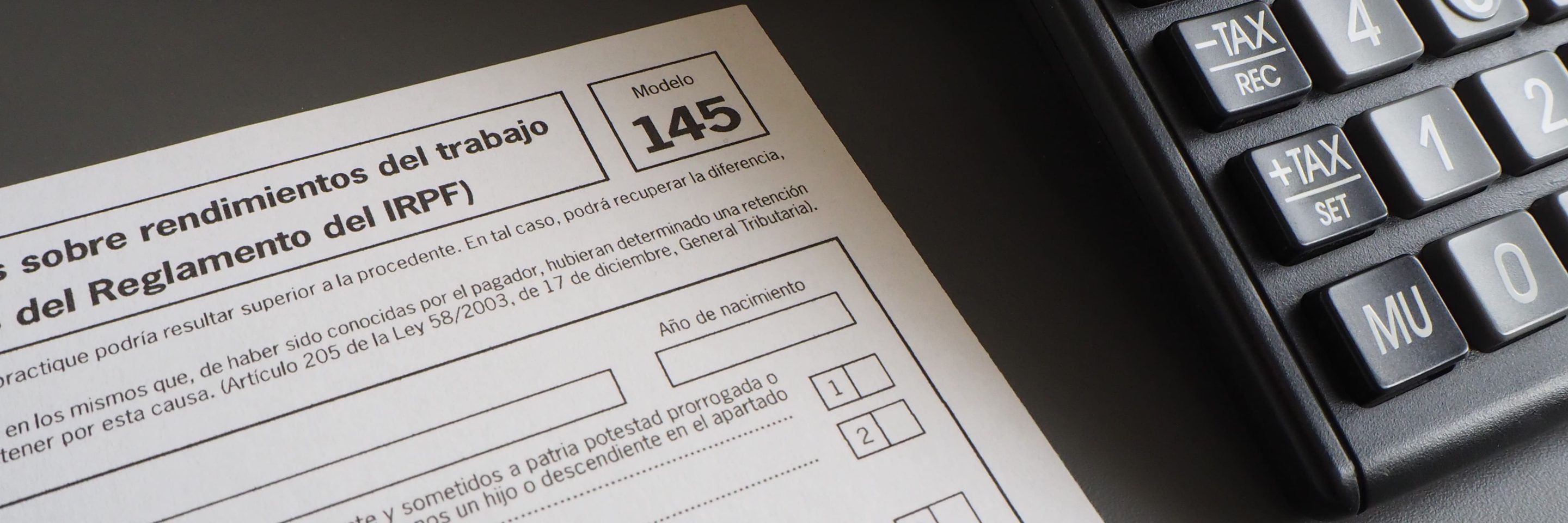
Form 145 is the document through which you communicate your personal and family situation to your employer, allowing the correct calculation of the IRPF withholding tax that will be applied to your payroll.
And this is the key point: if the information provided is incorrect or outdated, the calculation will also be incorrect.
Why is Form 145 so important?
Based on the information you provide, the company can:
- Calculate the appropriate IRPF withholding tax percentage.
- Apply reductions according to your personal situation.
- Adjust withholding according to your family circumstances.
- Avoid imbalances that may cause you to pay too much or too little.
In other words, this document determines whether you are paying the correct amount each month… or whether you may face unexpected results in your tax return.
How to understand and interpret Form 145
One of the most common mistakes is completing it without fully understanding it. The form is divided into several sections, each of which directly affects the calculation of the withholding tax.
Personal details and family situation
This section includes basic information such as your name, ID number, etc., as well as your family situation, classified as follows:
- Situation 1: dependent children living separately from the other parent.
- Situation 2: married individuals whose spouse’s income falls within the established limits.
- Situation 3: all other situations.
You must also indicate whether there is any disability or reduced mobility.
Your family situation directly affects the withholding rate: the greater the number of family dependants, the lower the withholding tax generally applied.
Children and descendants
You must include children under the age of 25, or older children with disabilities, who live with you.
This is one of the sections that generates the most uncertainty, especially in cases of shared custody or complex family situations.
Ascendants
This section includes mothers, fathers, grandmothers or grandfathers over the age of 65, or with disabilities, who live with you and are financially dependent on you.
Court-ordered pensions and maintenance payments
This section should only be completed when there are court-ordered obligations, such as those arising after a divorce, for example, compensatory pensions or child maintenance payments.
Main residence
Applicable only in certain cases, such as properties acquired before 2013.
Signature and date
By signing the form, you declare that all the information provided is truthful and up to date.
And this is precisely where many problems usually arise.
Most common mistakes in Form 145 and how to avoid them
Errors in Form 145 are more common than they may seem and, although they often go unnoticed, they can affect your payroll throughout the year and even lead to unexpected outcomes in your income tax return.
One of the most common mistakes is failing to update the form after a personal or family change.
The birth of a child, marriage, divorce, a change in custody arrangements or the recognition of a disability are situations that may modify the applicable withholding tax. However, many people continue using an outdated form for years without reviewing it.
It is important to remember one key point: Form 145 is not completed just once; it must be updated whenever personal circumstances change.
Mistakes related to children and descendants are also common, particularly in cases of shared custody or complex family situations. Incorrect information in this section may directly alter the IRPF calculation.
Another frequently overlooked aspect is reporting disabilities or court-ordered pensions. These details are particularly relevant because they may reduce the withholding tax applied and, if not properly reported, the final result may not accurately reflect the employee’s tax situation.
Perhaps the most widespread mistake is assuming that the company automatically corrects any changes. The reality is much simpler: Human Resources can only act based on the information it receives. If the form is incomplete or outdated, the withholding tax will be inaccurate as well.
Conclusion: a small document with a major impact
Form 145 is not just a simple administrative procedure. It is a key tool for your financial planning.
Managing it correctly allows you to avoid payroll errors, properly adjust your withholding tax and prevent unexpected issues in your income tax return.
Ultimately, taking a few minutes to understand and review Form 145 can make the difference between tax peace of mind… and an unpleasant surprise.
Related content


